Skip to product information
1 of 2

Lexicon

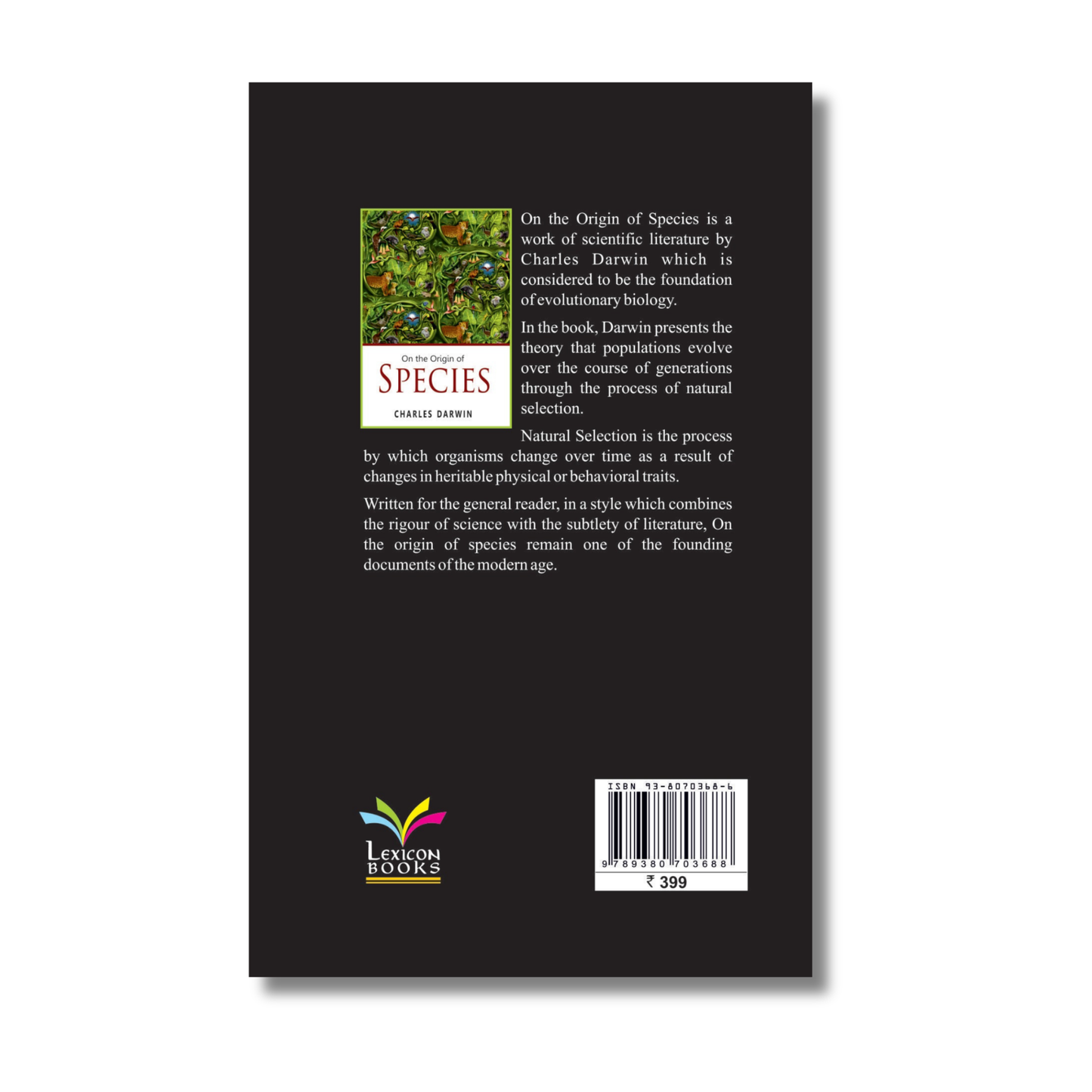
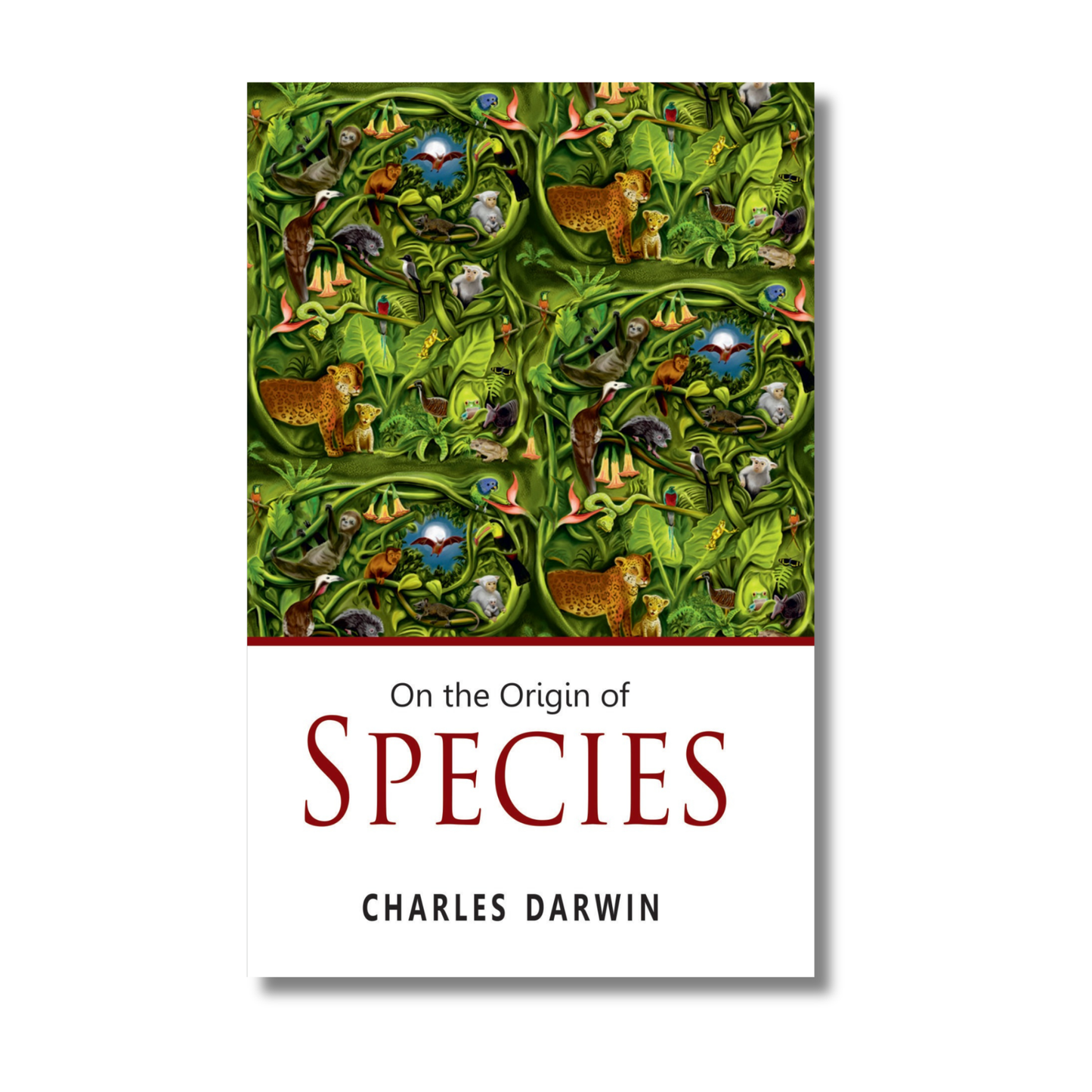
The Origin of Species By Charles Darwin (Paperback)

The Origin of Species By Charles Darwin (Paperback)

Regular price Rs. 349.00
Regular price Rs. 399.00 Sale price Rs. 349.00
12% OFF Sold out
Taxes included.
Free Shipping Over Rs 599
Save Extra On Prepaid Orders

Get it between -
Note:- Delivery time may vary

Offers Available (Tap to Open)
GET Extra Rs 25 OFF Order over Rs 599
GET Extra Rs 50 OFF Order over Rs 999
GET Extra Rs 150 OFF Orders over Rs 1999
GET Extra Rs 300 OFF Orders over Rs 2999
GET Extra 10% OFF Order above 10 Qty
GET Extra 15% OFF Order above 20 Qty

Delivery

It takes 3 to 7 Days for Delivery & usually Dispatch in 2 Days

Easy Replacements

We have 3 Days Replacements Policy...

100% Secure Payments

Your payments will be secure as we are using India's biggest payment gateway Pay U India
View full details

Explore the groundbreaking scientific work of Charles Darwin in this edition of The Origin of Species. This book revolutionized our understanding of the natural world and remains a seminal work in the history of science. With a new introduction and commentary, this edition is perfect for anyone interested in the history of evolutionary theory.

  • Meticulous research and insightful observations
  • Presents the theory of evolution through natural selection
  • Detailed exploration of diverse species and their origins
  • A landmark publication that continues to shape scientific research and discourse
  • Widely accepted as a cornerstone of modern biology
Publisher ‏ :- ‎ Lexicon Publication
Language ‏ :- ‎ English
Format : Paperback
ISBN-13 :- 9789380703688
Charles Robert Darwin, 12 February 1809 – 19 April 1882) was an English naturalist and geologist, best known for his contributions to evolutionary theory. He established that all species of life have descended over time from common ancestors, and in a joint publication with Alfred Russel Wallace introduced his scientific theory that this branching pattern of evolution resulted from a process that he called natural selection, in which the struggle for existence has a similar effect to the artificial selection involved in selective breeding.

Darwin published his theory of evolution with compelling evidence in his 1859 book On the Origin of Species, overcoming scientific rejection of earlier concepts of transmutation of species. By the 1870s, the scientific community and much of the general public had accepted evolution as a fact. However, many favoured competing explanations and it was not until the emergence of the modern evolutionary synthesis from the 1930s to the 1950s that a broad consensus developed in which natural selection was the basic mechanism of evolution. In modified form, Darwin's scientific discovery is the unifying theory of the life sciences, explaining the diversity of life.

Darwin's early interest in nature led him to neglect his medical education at the University of Edinburgh; instead, he helped to investigate marine invertebrates. Studies at the University of Cambridge (Christ's College) encouraged his passion for natural science. His five-year voyage on HMS Beagle established him as an eminent geologist whose observations and theories supported Charles Lyell's uniformitarian ideas, and publication of his journal of the voyage made him famous as a popular author.