


Lexicon
Republic By Plato (Paperback)
Republic By Plato (Paperback)
Free Shipping Over Rs 599
Couldn't load pickup availability
 Get it between -
Note:- Delivery time may vary
| Offers Available (Tap to Open) |
| GET Extra Rs 25 OFF Order over Rs 599 |
| GET Extra Rs 50 OFF Order over Rs 999 |
| GET Extra Rs 150 OFF Orders over Rs 1999 |
| GET Extra Rs 300 OFF Orders over Rs 2999 |
| GET Extra 10% OFF Order above 10 Qty |
| GET Extra 15% OFF Order above 20 Qty |
Delivery
Delivery
It takes 3 to 7 Days for Delivery & usually Dispatch in 2 Days
Easy Replacements
Easy Replacements
We have 3 Days Replacements Policy...
100% Secure Payments
100% Secure Payments
Your payments will be secure as we are using India's biggest payment gateway Pay U India
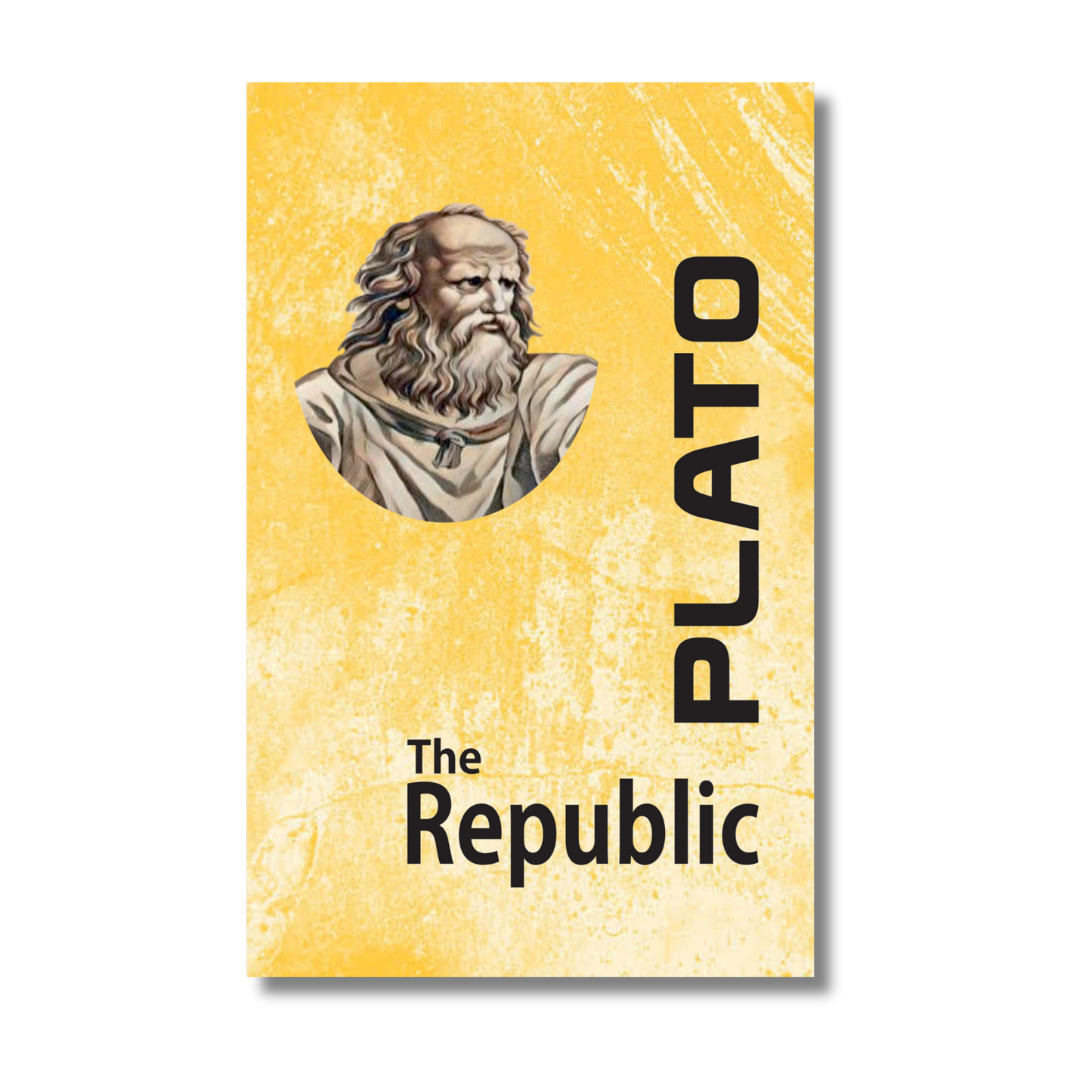
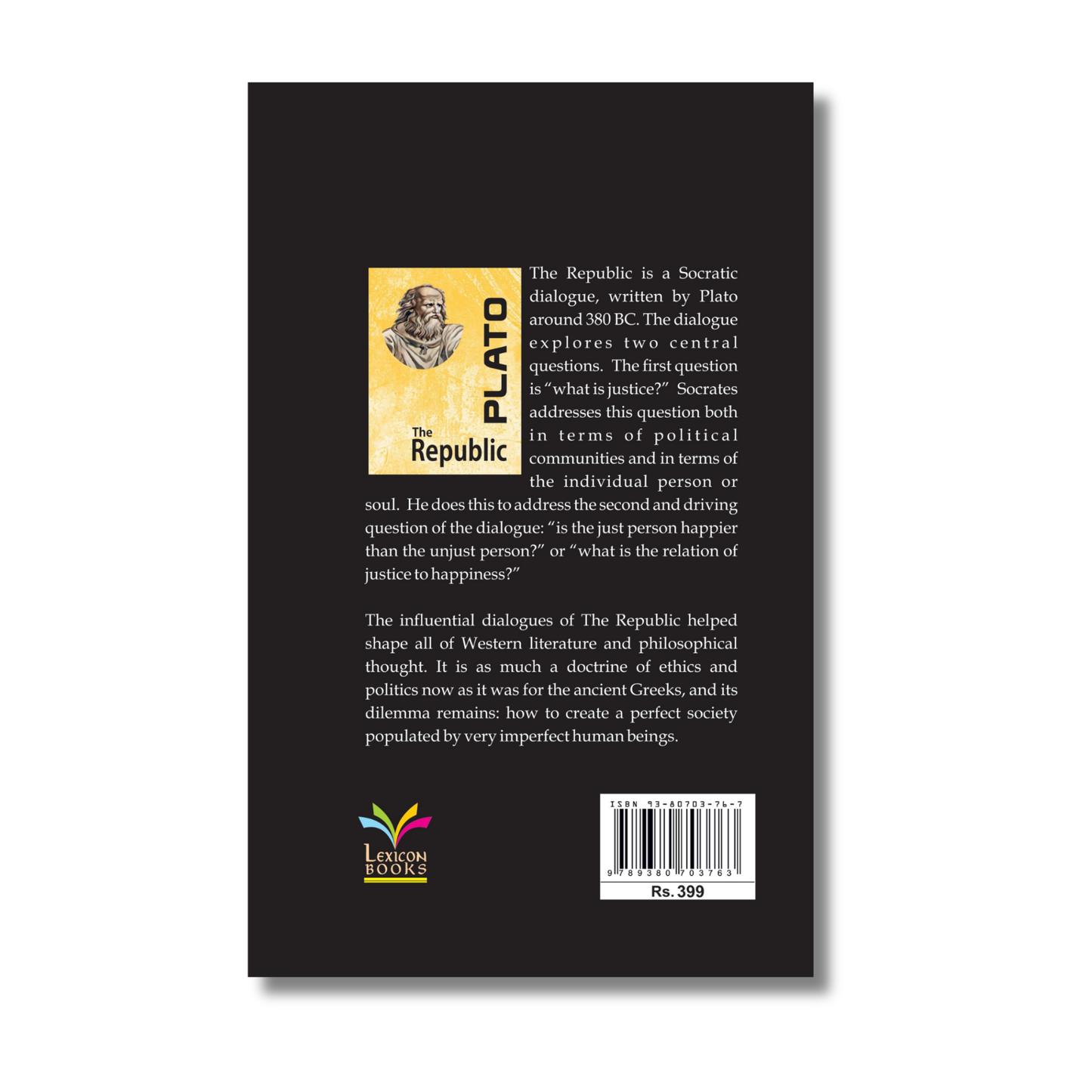
"The Republic by Plato is a Socratic dialogue, written around 380 BC; it is one of the most influential works of political philosophy. As is the norm in Socratic dialogue, here too, Socrates is the main speaker who engages in dialogue with other Athenians on the idea of justice. The central question that Plato addresses is what is justice? Both at the individual and political levels. He supplements his ethical question with the Secondary question What is the relation of justice to happiness? He furthers his argument with examples of a just city (kallipolis) as well as through discussions of different modes of justice, virtues and vices, the importance of a philosophical king, amongst other ideas. Since mid-19th century, the Republic has remained one of Plato's widely read dialogues and continues to influence political thought.".
- Choosing a selection results in a full page refresh.
- Opens in a new window.